Q&A with Our Specialists: How We Treat Youth Gambling—and Why Our Approach Is Different
Key Takeaways
Here at The Carpenter Shed, we treat youth gambling and gaming as a serious and clinically significant issue, not something young men will simply “grow out of.”
We focus on the emotional and identity-based drivers behind gambling behaviors rather than relying on surface-level restrictions or punishment.
Our structured, mentorship-driven, community-focused model creates accountability while building confidence, discipline, and purpose.
With newly completed specialized training in process addictions, our team is uniquely equipped to assess and treat youth gambling with precision, compassion, and long-term vision.
A Moment to Celebrate—and a Clearer Path Forward
Here at The Carpenter Shed, we believe growth should be celebrated.
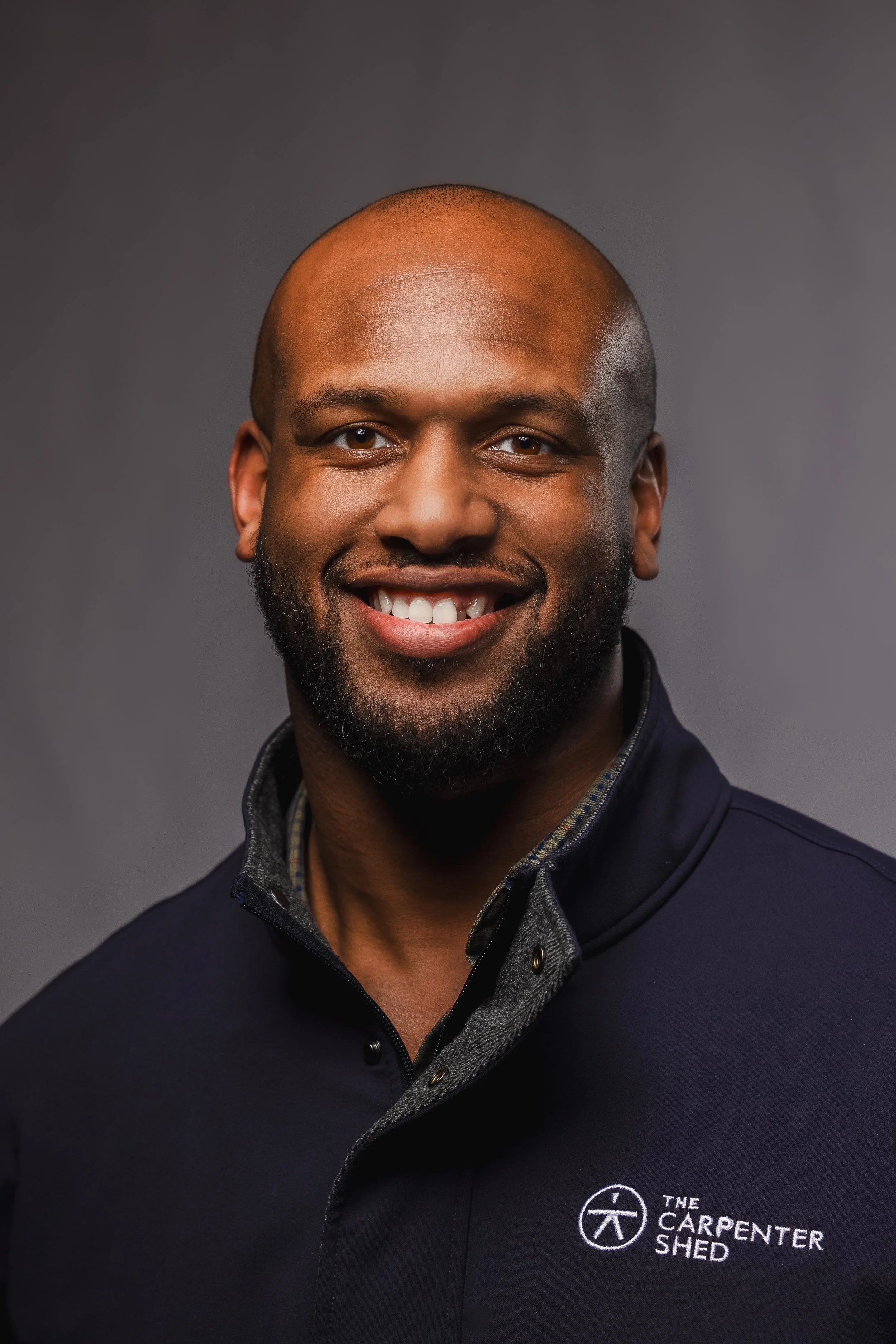
Two members of our clinical team, Allen Tatum, CIT, MA, CPLC (Developmental Counselor) and Christine Adams, MA, LPC-S (Brainspotting Practitioner / Primary Therapist), recently completed specialized training in process addictions, including gaming and gambling. This advanced training strengthens how we serve young men and reinforces our commitment to delivering thoughtful, developmentally appropriate care.
We’re proud of them and grateful for what this means for the young men and families who trust us.
If you’re a parent wondering whether your son’s gambling behavior is serious, or a young man who feels stuck in patterns you don’t fully understand, we want you to know this: we see you, and we’re equipped to help. Keep reading for their full Q&A sessions.
Why We Take Youth Gambling & Gaming Seriously
At The Carpenter Shed, we don’t view gambling as “just risky behavior” or “a phase.”
We understand that for many young men, gambling becomes a coping tool. It can offer:
A sense of control
A burst of excitement
A way to escape stress
A temporary boost to confidence
A distraction from uncertainty or identity struggles
When those patterns take hold, simply restricting access rarely leads to lasting change.
That’s why our work is rooted in structure, accountability, and relational depth. Our philosophy is that transformation happens when young men are known, challenged, and supported in community.
What Makes Our Approach Different
We do not isolate behavior from identity, reduce a young man to his struggle, or rely on punishment or compliance-based models.
Instead, we integrate:
Structured daily rhythms that promote responsibility
Mentorship that models integrity and steadiness
Clinical responsiveness informed by specialized training
Community living that builds accountability in real time
Faith-informed guidance that invites purpose without coercion
Come experience the Shed to get a clear look at daily life inside our program.
The Interview: Strengthening Our Standard of Care
Tell us about your training specific to process addictions like gambling, gaming, etc. What does it mean to be trained in this area?
Christine:
“My training in process addictions, including gambling, gaming, and other behavioral addictions, reflects both formal education and applied clinical focus. Being trained in these areas means understanding that process addictions are not simply issues of poor impulse control or maladaptive habits, but neurobehavioral conditions that activate the same reward pathways as substance use disorders and require similarly structured, evidence-based interventions.”
Allen:
“When it comes to training specific to process addictions like gambling and gaming, it carries a strong sense of importance for me. In my experience working with past residents, I’ve seen that some parents don’t view these behaviors as being as serious as substance use. However, gaining deeper training and knowledge in these areas equips me to better educate future clients and guardians. This training allows me to confidently explain that process addictions activate many of the same neurological pathways as substance addictions and can lead to similar patterns of compulsive behavior, loss of control, and significant life consequences. It also provides the historical and clinical context needed to demonstrate why gambling and gaming disorders should be treated with the same level of seriousness, structure, and intervention as substance use disorders. Ultimately, having this foundation strengthens my ability to advocate for clients and ensure that these addictions are recognized and addressed appropriately.”
How will your new trainings directly impact the standard of care provided to young men at The Carpenter Shed?
Christine:
“My current training in process addictions will directly enhance the standard of care provided to the young men served at TCS by strengthening early identification, clinical responsiveness, and treatment planning related to gambling, gaming, and other compulsive behaviors. Many young men engage in these behaviors as a means of emotional regulation, stimulation, or escape. This training equips me to recognize these behaviors as clinically significant and to intervene earlier and more effectively.”
Allen:
“The new training will directly enhance the standard of care we provide in several meaningful ways. First, it will allow us to effectively serve a broader range of youth, including those presenting with more complex or specialized challenges than we have typically encountered. Rather than referring out or feeling limited in scope, we will be better prepared to meet those needs within our program. Additionally, these trainings ensure that all areas of concern are thoroughly assessed and addressed when residents arrive at The Carpenter Shed. This leads to more comprehensive treatment planning and a more intentional approach to care, rather than focusing only on primary or surface-level issues. Finally, gaining deeper knowledge around specific diagnoses equips our team with the tools and clinical confidence to respond appropriately and effectively. As a result, we can responsibly expand the population we serve within our milieu while maintaining and strengthening the quality and integrity of care provided.”
What do you personally love about working at The Carpenter Shed?
Christine’s response reflects something we all believe here:
“I love working at The Carpenter Shed because I get to work with adolescent boys at a moment when their lives can truly change. Many of the young men we serve are not ‘bad kids’—they are overwhelmed, emotionally dysregulated, and struggling to express what they need in healthy ways. Their behavior is often a signal, not the problem…”
That’s how we see it, too.
Allen shares a similar perspective about the relational depth of our work. He speaks about stepping into families’ stories and building trust across state lines. That sense of unity and shared purpose is not accidental. It’s foundational to who we are.
Why This Advanced Training Matters for Families
When families come to us, they often ask:
“Does your team really understand what we’re dealing with?”
This specialized training allows us to answer confidently: yes.
As Christine explains, this specialized training ensures gambling and gaming behaviors are not dismissed as typical adolescence. Instead, they are assessed and treated through developmentally appropriate, evidence-based approaches.
How We Address Root Causes, Not Just Restrictions
Youth gambling is rarely random.
In our experience, it often connects to:
Emotional pain
Identity confusion
A need for validation
Unmet psychological needs
Avoidance of stress or failure
Rather than simply restricting behavior, we ask deeper questions:
What is this behavior giving him?
What does it protect him from?
Where does his sense of identity currently live?
Our model integrates structure, experiential learning, mentorship, and clinical care. Through experiential therapy, young men practice responsibility and confidence in real time.
And with structured routines, they learn that discipline and purpose can feel better than escape.
Looking Ahead: Purpose Beyond the Behavior
Allen captures our mission well when he says that addressing process addictions is about reestablishing identity.
At The Carpenter Shed, we help young men move from short-term thinking toward long-term vision. We replace impulsive decision-making with accountability. We replace isolation with community.
We help young men discover who they are capable of becoming.
Find out what the first step looks like.
Closing: Why We’re Confident in This Work
We’re proud of Allen and Christine.
We’re proud of the young men who walk through our doors.
And we’re confident that treating youth gambling with clinical seriousness, relational depth, and structured accountability creates lasting change.
Here at The Carpenter Shed, we don’t aim for quick fixes. We aim for transformation.
If you’re concerned about gambling or gaming, we invite you to reach out. Let’s talk about what’s really going on and what purposeful recovery could look like.
You don’t have to navigate this alone.